TNT SIM Registration Identity Fraud Risks 2026
If you use TNT SIM registration is required by law. But many users still ask a fair question: can SIM registration lead to identity fraud? The honest answer is yes, there are risks—but the biggest danger is usually not the official TNT process itself. The real problems often come from fake registration sites, stolen or forged IDs, phishing, and people using SIMs registered under someone else’s name. TNT says it follows the Data Privacy Act and uses technical, organizational, and physical security measures on its official registration portal, while the law says registration data must be treated as confidential and protected.
Quick answer
TNT SIM registration identity fraud risk is real when your ID details are stolen, copied, misused, or entered into fake registration systems. It also becomes a risk when a SIM is registered using false information, a fictitious identity, or a fraudulent ID. The SIM Registration Act specifically penalizes giving false or fictitious information or using fictitious identities or fraudulent identification documents to register a SIM.You can also read: TNT Registration Rules Every User Needs
Why this topic matters
Several pages already ranking for this topic mostly focus on generic benefits of the SIM Registration Act or simple scam warnings. One competitor page mainly explains fake re-registration texts and suspicious links, while another gives a broad overview of the law and its general benefits. Those pages are useful, but they leave a gap: they do not clearly explain what identity fraud actually looks like for an ordinary TNT user.
That gap matters because public reporting and official advisories show this is not just a theory. Smart and TNT warned users in 2024 about phishing messages leading to fake SIM registration portals, and Philstar reported in 2024 that cybercrime groups were using unregistered SIMs and SIMs with stolen identities to send fraudulent texts.
What identity fraud means in TNT SIM registration
In simple words, identity fraud here means someone uses your personal details, your ID, or a fake version of your identity to register or control a SIM. That can happen through fake portals, forged IDs, or shady agents who offer money for registered SIMs. The National Privacy Commission warned that registering SIMs for the purpose of sale puts the registered person at risk because the SIM can later be misused for illegal activity while still being tied to that person’s name.
The law was created to make SIM use more traceable and to reduce crimes such as scams and fraud, but that does not erase the risk of stolen identities. Public reports have noted that scammers can still use stolen identities or forged IDs inside the system, which is exactly why users need to be careful about how and where they register.
The biggest identity fraud risks TNT users should know
1. Fake TNT registration websites
This is one of the most common dangers. Smart and TNT warned users about fraudulent text messages that push subscribers to fake SIM registration portals. These sites are designed to look real and steal personal information. Smart also said there is no need to re-register a Smart or TNT SIM if it has already been successfully registered.
Smishing and OTP theft
Smart’s official anti-scam page says attackers use SMS phishing to trick people into giving personal information. It also clearly says official Smart, TNT, and Sun channels will never ask for your OTP, bank account details, or online account information. Once a scammer gets an OTP or account detail, the problem can spread beyond the SIM itself into banking, wallet, and app accounts tied to that number.
Stolen or forged IDs used in registration
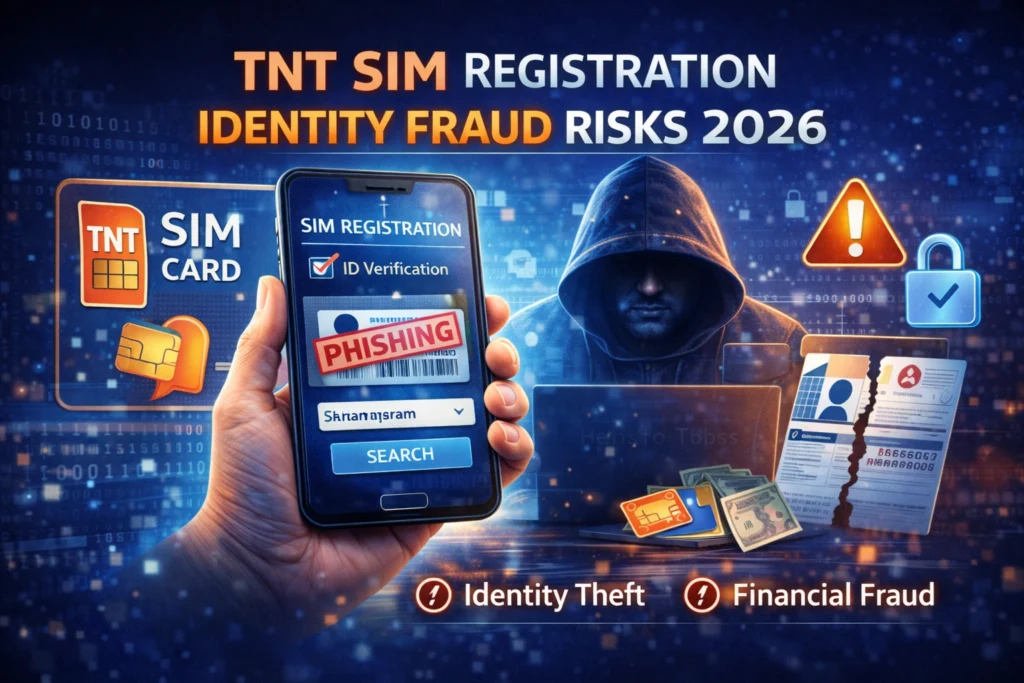
This is a more serious form of identity fraud. Public reporting in 2023 said scammers were using stolen identities to create fraudulent IDs for SIM registration, and a 2024 Philstar report said cybercrime syndicates were using SIMs with stolen identities for fraudulent SMS. That means identity fraud risk is not only about users making mistakes online; it is also about criminals trying to game the registration system itself.
Selling or handing over registered SIMs
The NPC publicly warned people not to register SIMs just to sell them later. Its advisory says this practice is prohibited and exposes the registered person to legal trouble, risks, and harm if the SIM is later used for illicit activities. This is one of the easiest ways a normal person can end up caught in an identity-fraud problem without realizing how serious it is.
Data misuse after careless sharing
TNT’s privacy policy says Smart collects personal data for prepaid account creation, after-sales care, ownership verification, and legal compliance, and it uses OCR to validate ID documents and transfer data from the proof of identification into its customer database. That official process is meant to prevent impersonation, but it also means users should be very careful with copies of their IDs and selfies, because those items are exactly what fraudsters want when pretending to be someone else.
Is the official TNT registration process itself unsafe?
Not by itself. TNT says its SIM registration portal complies with the Data Privacy Act and that it has technical, organizational, and physical security measures in place. TNT also says uploading your ID and selfie to the official SIM registration portal is safe. The IRR further says end-user data must be secured, encrypted, and protected at all times, and the law says SIM registration information is absolutely confidential and should not be disclosed except in limited cases allowed by law.
So the better answer is this: the official process is meant to be protected, but identity fraud risk still exists around the process because scammers target users before, during, and after registration.
How to protect yourself from TNT SIM identity fraud
Use only the official TNT or Smart registration and support channels. TNT’s official page points users to the official Smart registration portal and official help channels such as Smart Stores, hotline support, Messenger, chatbot, IVRS, and the GigaLife app.
Never share your OTP, bank details, or online account login details. Smart says official customer care channels will never ask for them.
Be suspicious of any “re-register now” message. Smart and TNT warned that successfully registered SIMs do not need to be registered again, and Smart Help says users can check status through the GigaLife app or the official registration portal.
Do not register a SIM for someone else just to sell it later. The NPC’s public advisory says this is prohibited and can expose you to privacy and legal risks if that SIM is later used in a crime.
Keep proof of your registration and review your details carefully. TNT’s official flow tells users to review the information pulled from the ID, correct anything wrong, and save the control number after submission.
What to do if you think your identity was misused
If you think someone used your identity for a SIM registration scam, stop sharing any more information right away. Then contact Smart through official channels and keep screenshots or records of the suspicious message or page. Smart’s help page also says suspicious messages should not be replied to, and suspicious links should not be clicked.
If your SIM is lost, stolen, or compromised, TNT says it should be reported immediately, and Smart says the registered SIM owner can request a replacement with the same number at a Smart Store. TNT also says lost or stolen SIMs should be reported within 24 hours.
If your privacy rights may have been violated, TNT’s privacy policy says users can contact Smart first and may also file a complaint directly with the National Privacy Commission.
FAQs
Final Words
TNT SIM registration identity fraud risk is real, but it usually starts around the process, not from the official process alone. Fake portals, stolen IDs, OTP theft, and the resale of registered SIMs are the real danger signs. The safest move is simple: use only official TNT and Smart channels, protect your ID and OTP, never let someone register or sell a SIM in your name, and act fast if something feels wrong.