TNT SIM Data Privacy Explained 2026
If you are registering a TNT SIM, it is normal to ask what happens to your personal data. The short answer is this: TNT, through Smart, collects your registration details because the SIM Registration Act requires it, and the law says that information from the registration process must be treated as absolutely confidential. TNT also says it uses security measures to protect customer data.
Quick answer
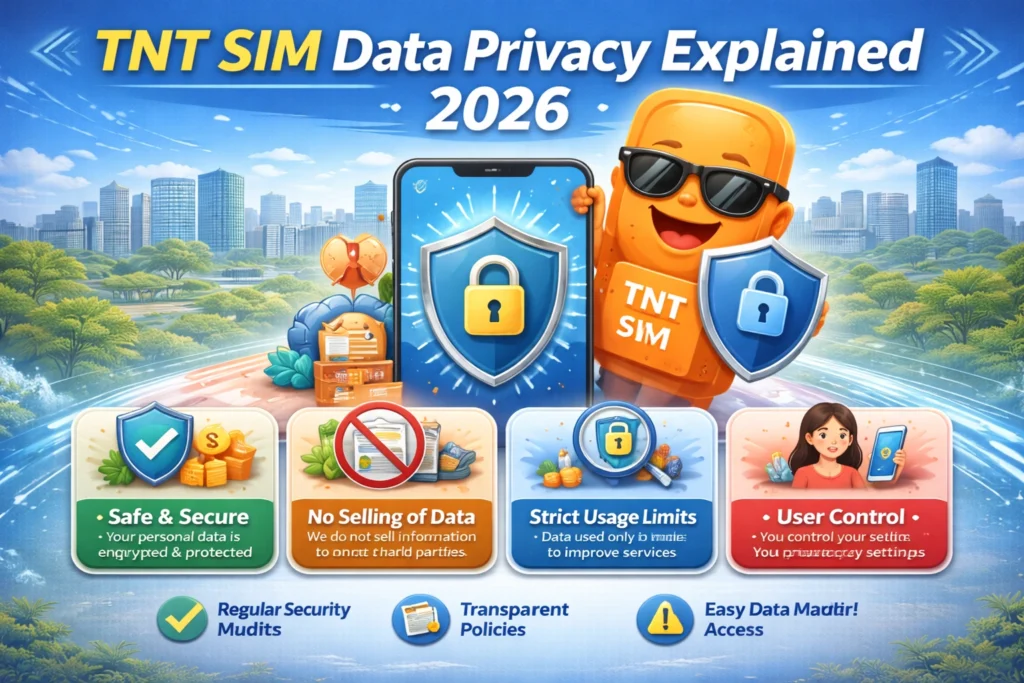
TNT SIM data privacy means your registration details are not supposed to be shared freely. Under the IRR of the SIM Registration Act, the data collected during SIM registration must be kept confidential, and telecom companies must keep user data secured, encrypted, and protected. TNT’s privacy policy also says Smart uses technical, organizational, and physical safeguards to protect personal data.You can also read: TNT Registration Scam Warning 2026
What data does TNT collect during SIM registration?
TNT’s SIM registration page says the registration process collects details such as nationality, ID type, ID number, government ID, selfie with ID, full name, date of birth, sex, address, alternate contact number, and email address. TNT also explains the normal registration flow: you enter your number, agree to the terms and privacy notice, receive an OTP, upload a valid government ID, take a selfie, review the auto-filled information, and submit an attestation that your details are true.
TNT’s broader privacy policy adds more context. It says Smart collects personal data to create and provide prepaid subscriptions, manage accounts, support after-sales care, verify account ownership, and comply with legal requirements. It also says that for SIM registration it uses OCR technology to validate the proof of identification and automatically transfer details from the ID into Smart’s customer application database.
Why does TNT ask for all this information?
The simple reason is legal compliance. The SIM Registration Act IRR says the rules cover the registration of new and existing SIMs, and TNT’s SIM registration page says new SIMs must be registered before activation while existing users were also required to register under the law. TNT also explains that the law is meant to help protect users from crimes done through SIMs, electronic messages, and internet communication, including scams and fraud.
From a privacy point of view, the law does not let telcos collect data for just any reason. The IRR says the processing of personal data submitted for SIM registration must have a legitimate purpose and must meet the lawful processing rules under the Data Privacy Act of 2012.
How is your TNT registration data protected?
The IRR places direct security duties on telecom providers. It says they must ensure that end-user data is secured, encrypted, and protected at all times, comply with minimum information security standards, conduct privacy impact assessments, implement reasonable physical, organizational, and technical security measures, and enable mechanisms for users to exercise their rights as data subjects.
TNT’s privacy policy says Smart stores personal data using secure systems and processes designed to protect it from unauthorized access, alteration, or loss. It also says Smart uses secured servers, firewalls, encryption, restricted access for qualified personnel, confidentiality obligations for third-party partners, and regular audits and testing of security protocols.
The National Privacy Commission has also publicly pushed telcos to tighten privacy protections around SIM registration. In late 2022, the NPC met with telcos to address public concerns and directed them to remove notices and tick boxes related to third-party sharing from the registration flow, while keeping promotional consents separate and optional.
Can TNT share your SIM registration data?
Not freely. The IRR says information obtained in the registration process must be treated as absolutely confidential and not disclosed to any person. But it also lists narrow exceptions. Disclosure can happen when required by law in line with the Data Privacy Act, in compliance with a court order or legal process upon probable cause, under specific provisions of the Act and IRR, or with the written consent of the subscriber. The same IRR also says a waiver of confidentiality cannot be made a condition for approving a subscription agreement.
The IRR further says telecom providers may be required to provide information obtained in registration when there is a subpoena from a competent authority tied to an investigation involving a specific mobile number allegedly used in a crime or malicious or fraudulent act. That is a legal process, not open sharing.
TNT’s privacy policy also says Smart may allow access to personal data for authorized third-party service providers that help deliver services, but it says those parties are under confidentiality obligations and must process the data according to Smart’s instructions and privacy requirements.
How long does TNT keep your data?
There are two important timelines to understand. The SIM Registration Act IRR says telecom providers must keep the relevant data and information of a deactivated SIM for ten years from deactivation, solely for the purpose described in the law.
TNT’s general privacy policy says Smart keeps personal data only for as long as necessary for service delivery, legitimate business purposes, compliance with laws, and legal claims, with a maximum retention period of twelve years from permanent service deactivation. That is the company’s broader retention statement, while the SIM registration rule specifically mentions ten years for relevant deactivated-SIM data.
What rights do TNT users have over their personal data?
TNT’s privacy policy says users have rights under applicable privacy laws. It specifically mentions the right to request access to personal data and the right to request correction if the data is outdated, inaccurate, or incomplete. It also says users can withdraw consent when processing is based on consent, contact the Data Privacy Office, and file a complaint with the National Privacy Commission if they believe their privacy rights were violated.
TNT provides a direct contact point for privacy concerns through Smart’s Data Privacy Office, including the email address dpo@smart.com.ph.
Is the selfie and ID upload really necessary?
Yes. TNT’s registration page and Smart’s own registration guides show that a valid government ID and a selfie are part of the standard registration process. Smart’s photo guide says the selfie should clearly show your face, use good lighting, avoid hats and glasses, and not use filters. It also says the ID photo should be clear, readable, within the frame, current, and not expired.
The privacy side of that process has also been addressed by the NPC. The Privacy Commissioner said selfie verification should satisfy the general privacy principles of transparency, legitimate purpose, and proportionality, and that registrant data must be protected against misuse, unauthorized processing, data breaches, and other security incidents.
What are the real privacy risks users should watch for?
The biggest risk is usually not the official TNT portal itself. It is fake registration offers, phishing, and people trying to buy or misuse registered SIMs. The National Privacy Commission warned in a public advisory that some individuals were offering money for already registered SIM cards, and it said this practice is prohibited and can expose the registered person to privacy risks, legal problems, and harm if the SIM is used for illegal activity.
The same advisory recommends staying alert, being cautious of unsolicited offers, reporting suspicious activity to the telco, promptly reporting changes in subscriber information, and ensuring proper identity verification before any transfer of SIM ownership.
Simple tips to protect your privacy during TNT SIM registration
Use only the official TNT or Smart registration channels. TNT points users to the official Smart registration portal and also lists Smart Stores, the hotline, Messenger, chatbot, IVRS, and the GigaLife app as official help channels.
Read the privacy notice before you submit. TNT’s registration steps explicitly say you should read and agree to the terms and privacy notice before moving forward.
Use clear, real, current information. Smart’s photo tips explain how to avoid rejected uploads, and TNT’s flow includes reviewing the auto-filled data before final submission.
Keep your control number and confirmation message. TNT tells users to screenshot the control number and wait for the text confirmation after submitting.
Report problems fast. The IRR requires providers to offer user-friendly ways to report fraudulent texts or calls, lost or stolen SIMs, death of a registered user, and changes in information.
FAQs
Final Words
TNT SIM data privacy is not just a checkbox issue. It is a legal, security, and trust issue. The law says your registration data should be confidential, and TNT says it uses security controls to protect it. But users still need to be careful, especially with fake offers, suspicious links, and anyone asking to use or buy a SIM already registered in their name. The safest approach is simple: use the official portal, read what you are agreeing to, keep your records, and report anything suspicious right away.